
Balayage in Rome: What It Is, Who It Suits, and When to Choose It
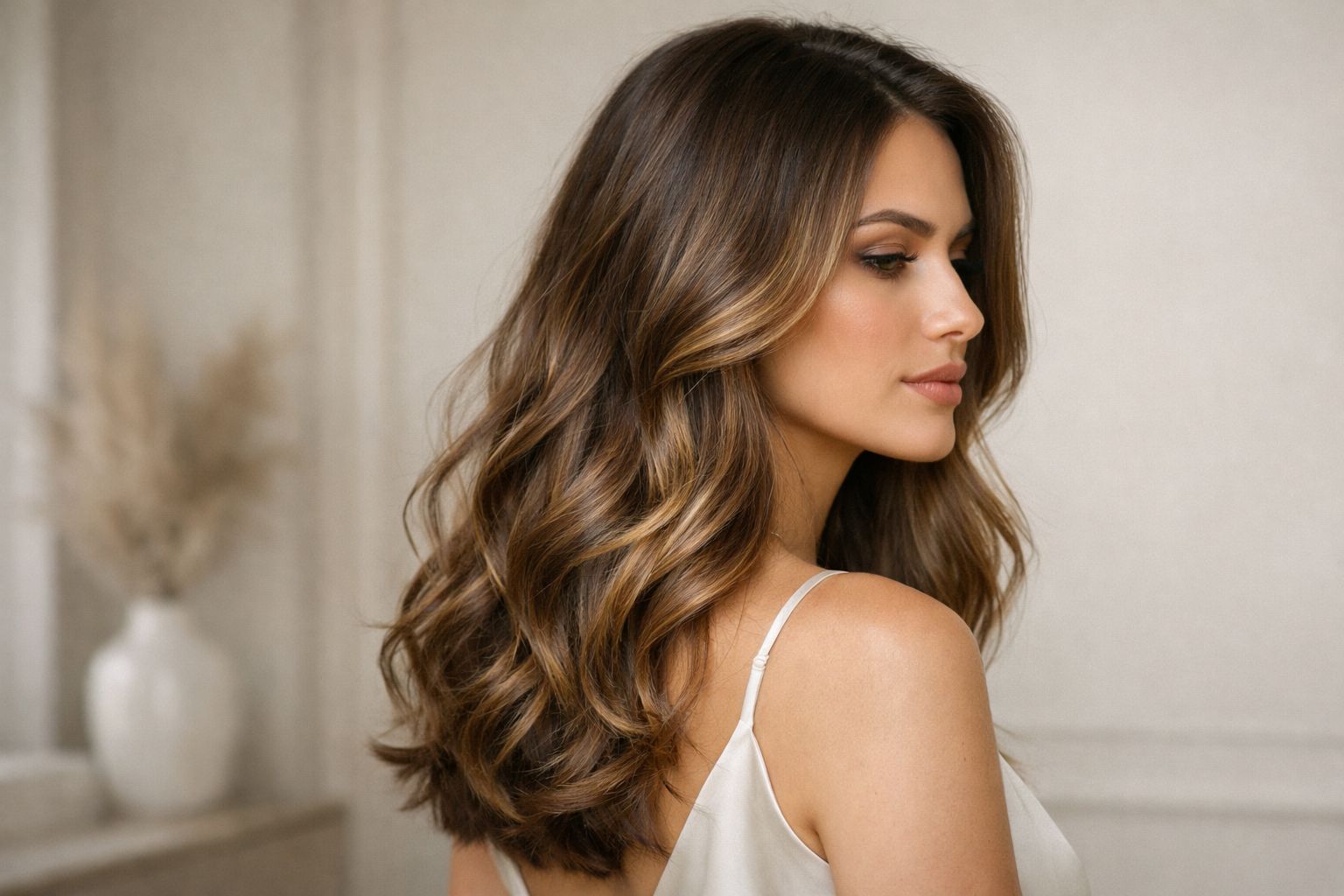
Balayage is a technique built around tailored lightening placement that creates brightness, depth, and a natural-looking effect, rather than a dense or rigid colour result. It makes sense when you want an elegant finish that works with your starting base, your personal style, and the level of upkeep you are genuinely willing to maintain.
In practice, balayage is not simply about making the hair lighter. It is about creating dimension in the colour so the hair moves better visually and works more softly with the face, without overly harsh transitions.
- it suits those who want light and movement with a balanced result
- it works best when it is designed around the individual
- it calls for realistic expectations about the starting base
- it does not mean no maintenance, even if it tends to grow out more softly
The important thing is not to chase a trend label, but to understand whether this choice fits your base, your style, and your relationship with maintenance.
Balayage works best when it is approached as an exercise in balance rather than a formula to be copied. A soft result comes from personalised design, carefully measured lightening, and the overall quality of the colour plan. Even when the grow-out looks more delicate over time, expectations still need to remain realistic: natural does not mean accidental, and refined does not mean maintenance-free.
- balayage is not a standard effect, but a colour project built around the individual
- a truly elegant result depends on proportion, not on stronger lightening
- a softer-looking grow-out does not mean no upkeep
- the technique should be chosen based on the aesthetic goal, not only the trend
- the more precisely the colour works with the face, cut, and style, the more convincing the result feels
What Balayage Really Is
When people ask what balayage is, the right answer is not “just a few lighter pieces,” but a deliberate way of building light through the hair. It is a technique that creates movement, depth, and a visually elegant result, with a softer transition than a solid colour or a more contrasting lightening pattern.
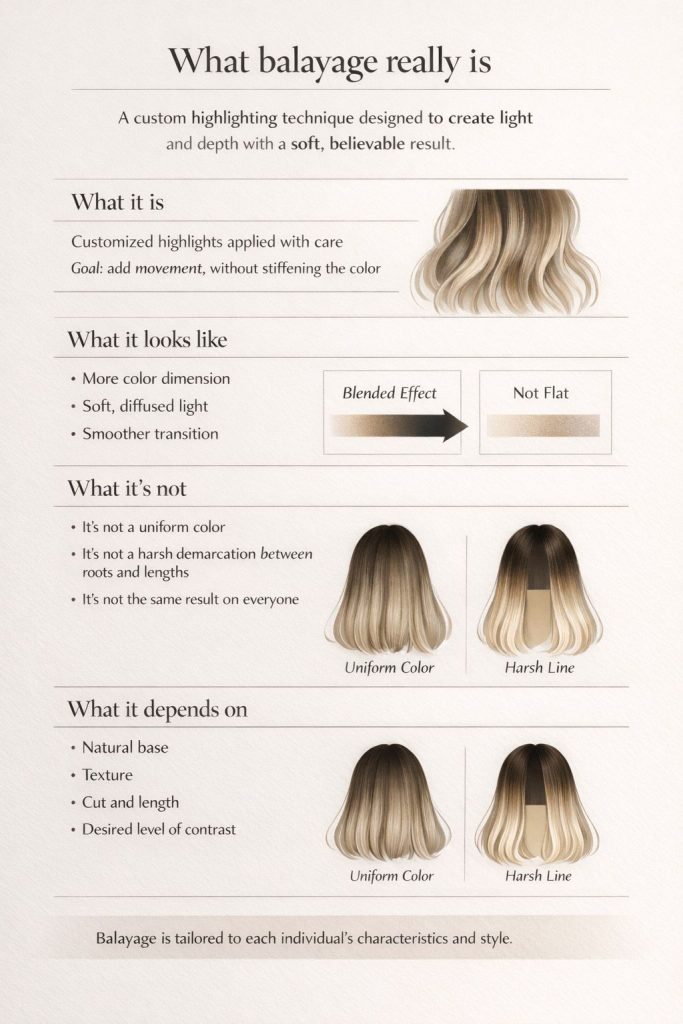
From a professional point of view, balayage is a freehand technique in which lighter pieces are placed according to the haircut, the density of the hair, and the kind of brightness you want to see. The goal is not to lighten more, but to lighten more precisely: the result should create a soft colour transition, look believable, and add dimension without making the hair feel visually harsh.
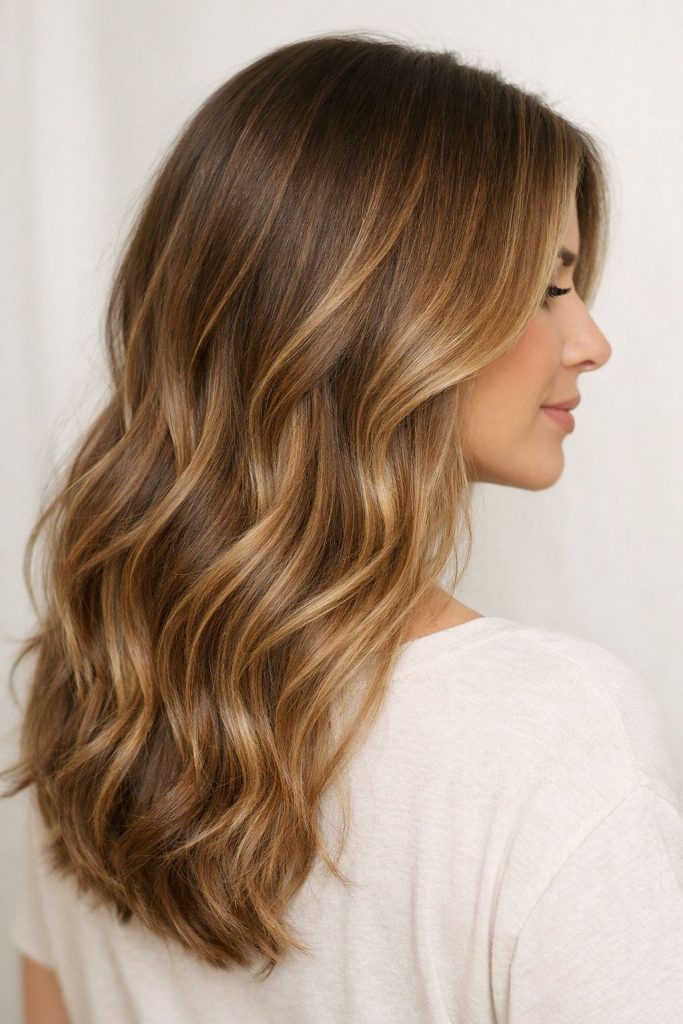
That is why it is impossible to talk about balayage seriously without talking about personalisation. If you want to see how this technique is interpreted in a professional setting, the balayage service helps frame the colour as a tailored project rather than a fixed formula.
What visual effect it creates on the hair
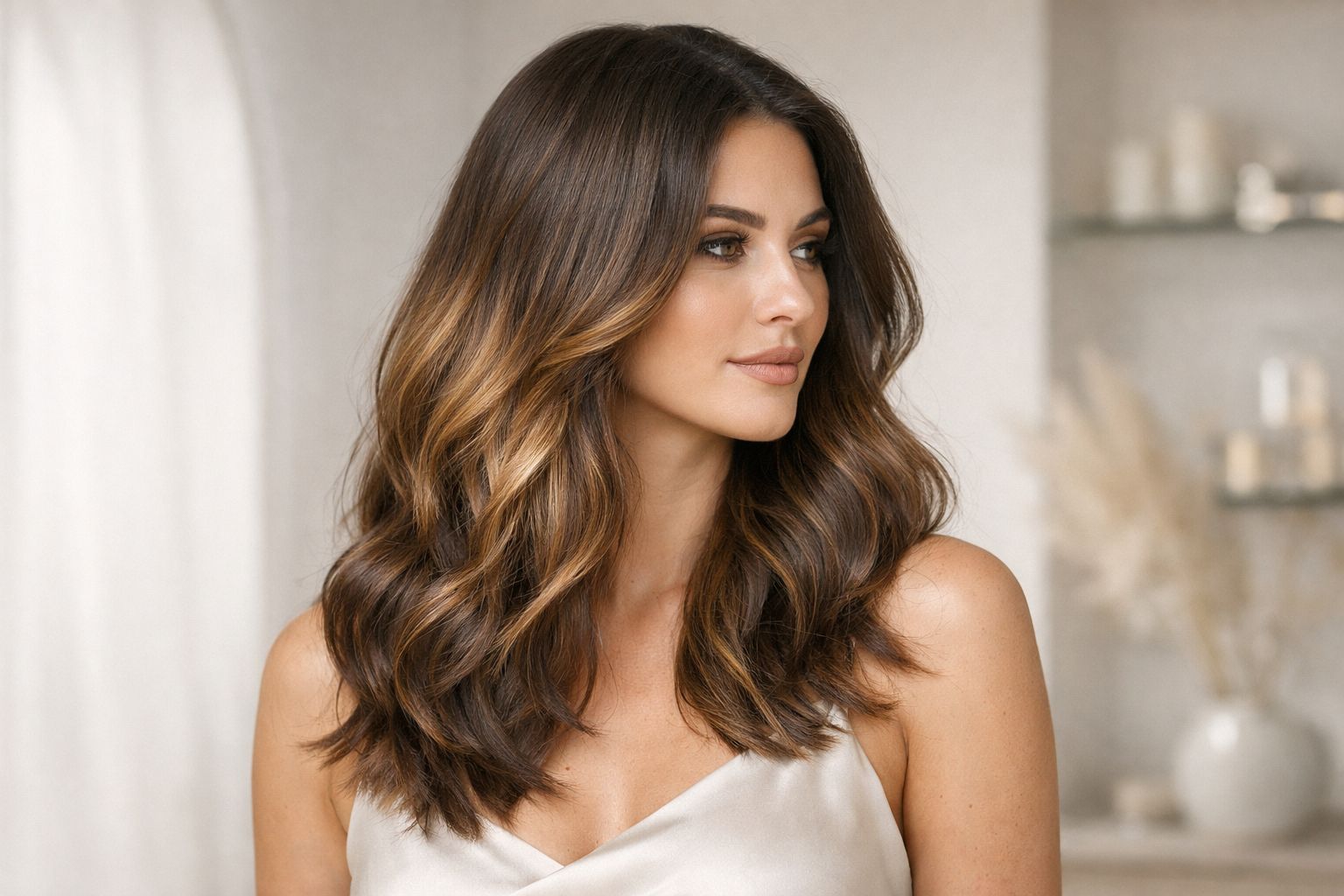
Balayage creates a more airy, refined sense of dimension in the colour: the hair looks more alive, light reads through it more naturally, and movement becomes more visible. Its value lies in graduality: the colour does not dominate the look, but works with the face and the cut more softly.
Why there is no one balayage that suits everyone
There is no universal balayage because the starting base changes, the level of contrast that flatters the face changes, the texture changes, and the hair moves differently from one person to another. The technique may be the same, but the result always has to be interpreted through the individual.
Who Balayage Suits
Balayage suits someone best when it is chosen to enhance the person, not to reproduce someone else’s result. It is not a technique that works “for everyone” in exactly the same way. It works especially well where the base, the facial lines, and the personal style call for brightness, movement, and a softer visual transition.
Base colour, skin tone, and level of contrast
To understand who balayage really suits, you need to begin with the starting base and how it relates to the skin tone. On a medium or deeper base, balayage can look especially elegant when the contrast is carefully measured; on a lighter base, the emphasis often shifts to the quality of the light and the finesse of the blend.
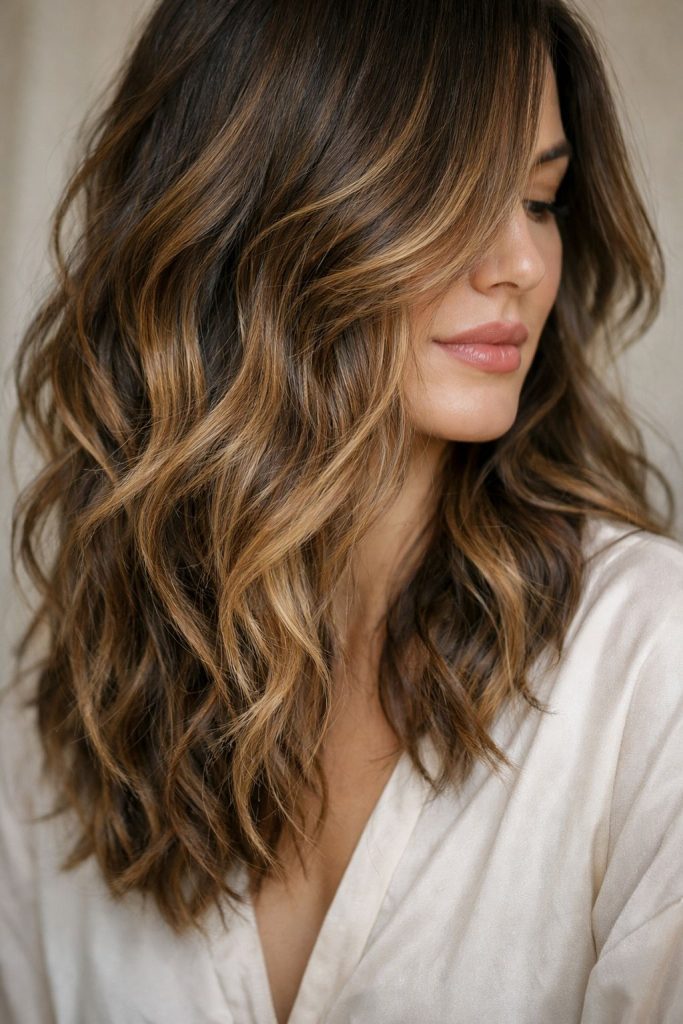
That is why there is no single rule that works equally well for brown hair, lighter shades, or deeper tones. What matters is reading contrast correctly for the individual face. This is also where “why colour and cut work best together” becomes relevant, because the final result depends not only on colour, but on how that colour works with the overall shape of the hair.
Texture, length, and movement in the cut
The outcome also depends on hair texture and length. On wavy hair, balayage often shows depth and movement more easily; on straight hair, every transition reads more clearly, so the placement of light has to be even more precise.
- on long hair, the blend has more space to develop gradually
- on medium lengths, more precision is needed to preserve balance and readability
- on straight hair, the colour reads more clearly
- on wavy hair, movement naturally amplifies visual depth
When to Choose It — and When Not To
Choosing balayage makes sense when the technique answers a clear goal, not when it is requested simply as a generic refresh. The point is not to follow a trend for its own sake, but to understand whether this option truly aligns with the result you want, your starting base, and the level of refinement you expect from a strong initial consultation.
When balayage genuinely works in your favour
Balayage is especially appropriate when you want brightness, movement, and a visible change that does not feel harsh. It works well when the aesthetic goal is to make the colour feel livelier, visually lighten the overall mass of the hair, or add depth without creating an overly sharp contrast.
- when you want to brighten the colour without making it look uniform
- when you want a softer transition rather than a pronounced contrast
- when you want a personal result, not a standard one
- when you are willing to think about the final effect before the technique itself
When a more careful evaluation is needed
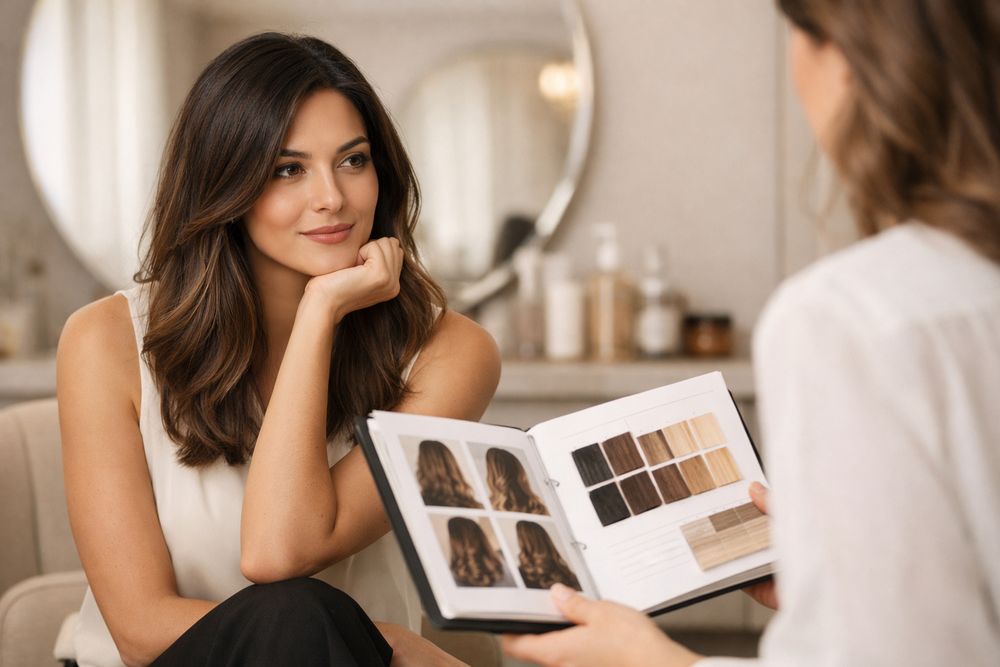
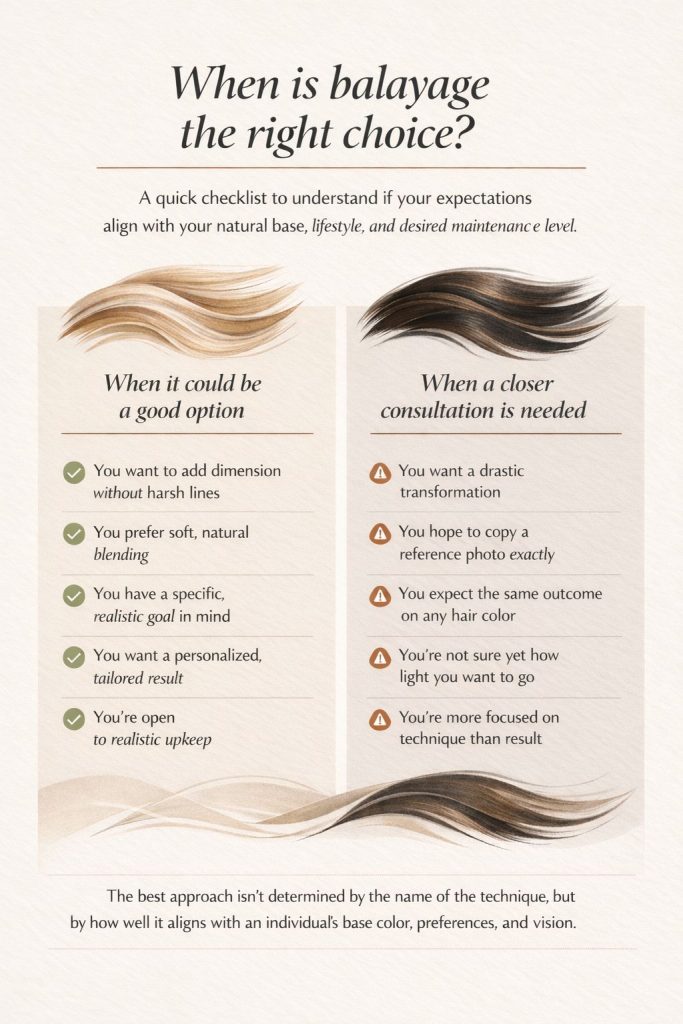
Balayage deserves more caution if you want a very strong transformation, a lightening effect that reads immediately, or a result identical to a photo that does not match your base. In those cases, the question is not only when to choose balayage, but whether it is truly the technique that best answers your goal. This is exactly where how to prepare for a consultation becomes useful, because a more precise request during consultation helps establish realistic expectations from the start.
Realistic Limits and Common Mistakes to Avoid
One of the most common mistakes is to treat balayage as a universal answer to any desire for change. In reality, it works well only when it is chosen thoughtfully.
The first thing to accept is realistic expectations. If the goal is to achieve very strong contrast in a single session, to copy a photo without considering the starting base and the real hair texture, or to change the whole image without a clear direction, the risk of disappointment becomes higher. Confusion is often made worse by misleading inspiration photos: they may suggest a mood, but they do not determine on their own what will look harmonious on another person.
- asking for a very sharp effect when what you really want is a soft transition
- choosing the technique before the final result is clear
- expecting an exact copy of a photo that does not match your base
- assuming natural means accidental or completely maintenance-free
- underestimating the role of consultation in defining measure and direction
Maintenance and How It Wears Over Time
One of the reasons balayage is often chosen is the sense that it grows out more softly over time. That is a real visual advantage, but it needs to be understood accurately: a more flexible maintenance experience does not mean no maintenance at all.
Maintenance with balayage is not only about the timing of the next correction, but also about how the overall look evolves. Grow-out may appear less harsh than with more contrasting techniques, but that does not mean the colour remains unchanged on its own. Over time, shine, tone freshness, and the clarity of the blend can all shift.
- grow-out may look softer, but the colour still needs to be monitored over time
- how fresh the result feels depends on the base, the chosen contrast, and the quality of the blend
- tone and shine may lose precision before the next technical service is needed
- a consistent routine helps preserve order, balance, and visual elegance
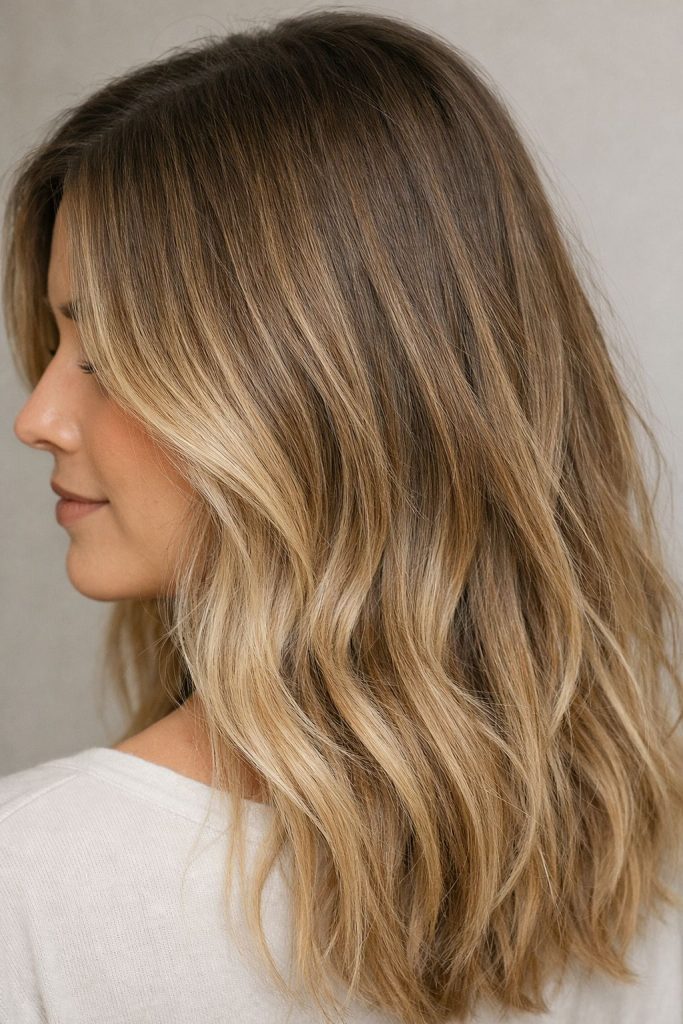
That is why it is important to build the right expectations from the beginning: balayage may wear time beautifully, but it remains a colour service that still depends on balance and on colour maintenance.
Quick Comparison
When the conversation turns to balayage vs ombré or balayage vs shatush, the most common mistake is to treat these techniques as interchangeable. In reality, what changes is the way light is built, the level of perceived contrast, and the way the final result reads on the hair.
An at-a-glance comparison of balayage, ombré, and shatush: visual effect, perceived contrast, and how grow-out tends to read.
| Technique | Main visual effect | Perceived contrast | How grow-out tends to look | When it may make sense |
|---|---|---|---|---|
| Balayage | Soft diffused light, personalised blending, airy result | Medium or adjustable | Visually softer | When you want an elegant, tailored result with a less rigid finish |
| Ombré | A more visible transition from roots to lengths | Medium to high | Depends on how the colour is built | When you want a more clearly defined transition |
| Shatush | Lightening with a more pronounced or specific effect that depends on the hair | Variable | Depends on the base and intensity | When you want something other than the same blend created by balayage |
| Starting base | Strongly affects the final result of any technique | To be confirmed during consultation | To be confirmed during consultation | It should always be evaluated before choosing the technique |
| Texture and length | Change the depth, readability, and overall harmony of the colour | To be confirmed during consultation | To be confirmed during consultation | They determine how soft or how defined the result will appear |
Broadly speaking, balayage usually creates a more personalised, airy blend; ombré is more often perceived as a clearer transition from roots to lengths; shatush follows a different lightening logic. Even how noticeable the grow-out feels depends not only on the name of the technique, but on how the colour has actually been designed and distributed.
That is why a short comparison helps with orientation, but does not replace a precise choice. If your main question is which visual effect best matches your goal, it is natural here to turn to “how balayage, ombré and shatush differ”.
When It Makes Sense to Explore Further
Once you understand what balayage is, who it tends to suit, and which limits deserve attention, the next step is not to decide faster, but to understand whether there is a coherent, well-shaped plan that genuinely fits you. In the context of balayage in Rome, the difference is not in choosing a fashionable label, but in turning a general idea into a result that feels measured, readable, and personal.
It makes sense to explore further when you already have a fairly clear aesthetic goal, but need to understand how to adapt it to your real base, your texture, and your style. This is exactly where personalisation becomes decisive.
- when you want more brightness without making the colour feel rigid
- when you have reference images but want to understand what is realistic on you
- when you want to move beyond generic requests toward a more precise choice
- when it is clear that the result depends on the overall project, not only on the name of the technique
It is especially worth looking deeper when the question is no longer “Do I like it?” but “Does it truly feel like me?” At that stage, consultation helps clarify proportion, intensity, and direction in a more precise way.