
First Balayage: How to Prepare for the Consultation and What to Expect

A first balayage does not really begin with lightening; it begins with a well-led consultation. Before choosing tone, intensity, and where the light should sit, the colorist needs to understand your base, your color history, and the result you imagine in real life. Arriving prepared makes the conversation clearer and helps build a color plan that feels credible, elegant, and sustainable.
Quick Answer: How to Prepare for Your First Balayage Consultation
For your first balayage consultation, you do not need to arrive with a fully fixed idea. It is more useful to bring clear references, be honest about your color history, and explain the kind of result you would like in everyday life, not only in an idealized image.
Before the appointment, prepare:
- 2–4 realistic reference photos, ideally in natural light and with hair similar to yours in base color, length, and movement.
- Your recent color history, including permanent color, glosses, toners, lightening, henna, or smoothing treatments.
- Your styling habits, such as frequent use of straighteners, curling tools, blow-drying, swimming pools, sea exposure, or frequent washing.
- A clear but flexible goal, for example more brightness, a natural effect, or a visible yet gradual change.
- Practical questions, about timing, maintenance, possible number of sessions, and home care.
The consultation turns inspiration into a personalized color plan, taking into account your natural base, lengths, hair quality, and realistic lightening potential.
Why the Consultation Is the Real First Step of Balayage
A well-designed balayage does not start with choosing a photo; it starts with a careful initial assessment. Before discussing lightening, it is important to understand your starting color, the quality of your lengths, how you wear your hair every day, and the aesthetic goal you want to achieve.
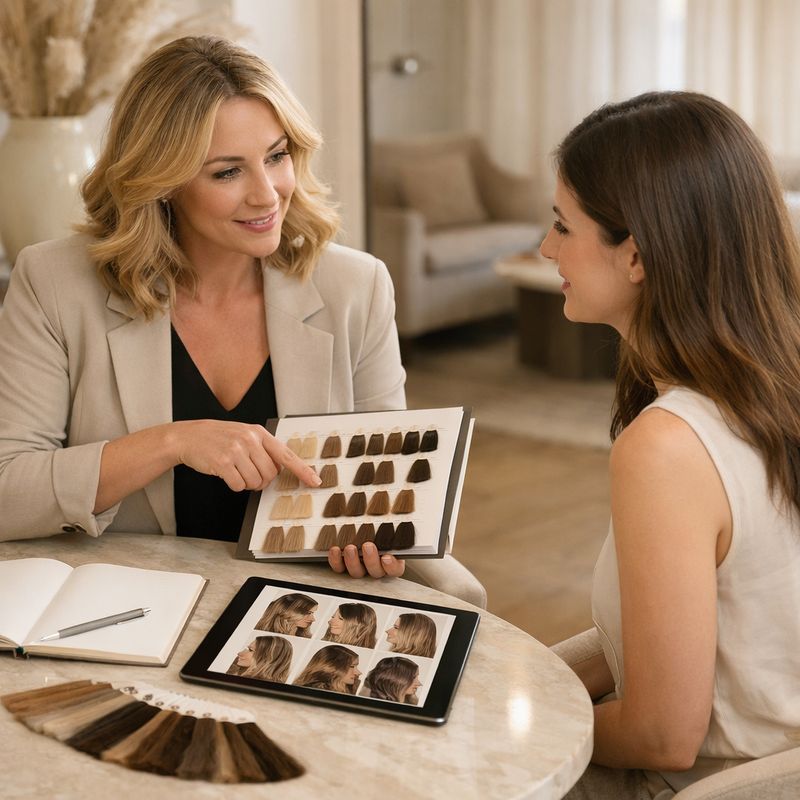
During the color consultation, the colorist translates your wish into a possible path. Not all hair reacts in the same way, especially when there are previous colors, layered reflections, or already sensitized ends. This is why a balayage consultation helps define not only “how much to lighten,” but also where to place brightness, how much contrast to keep, and what kind of maintenance will be realistic after the service.
This is also where it helps to understand whether balayage is right for you. Arriving at your first appointment with this awareness avoids rigid expectations and makes the dialogue with the salon much more precise.
What to Bring to the Consultation: Photos, Color History, and Your Final Goal
Arriving prepared means giving the colorist enough information to read your starting color, your color history, and the result you imagine on yourself, not on someone else.
Reference Photos: How to Choose Them Without Creating Unrealistic Expectations
Photos are useful when they are treated as an aesthetic direction, not as a promise of an identical copy. A reference can clarify whether you like brightness around the face, soft lightening through the lengths, visible contrast, or an almost imperceptible result.
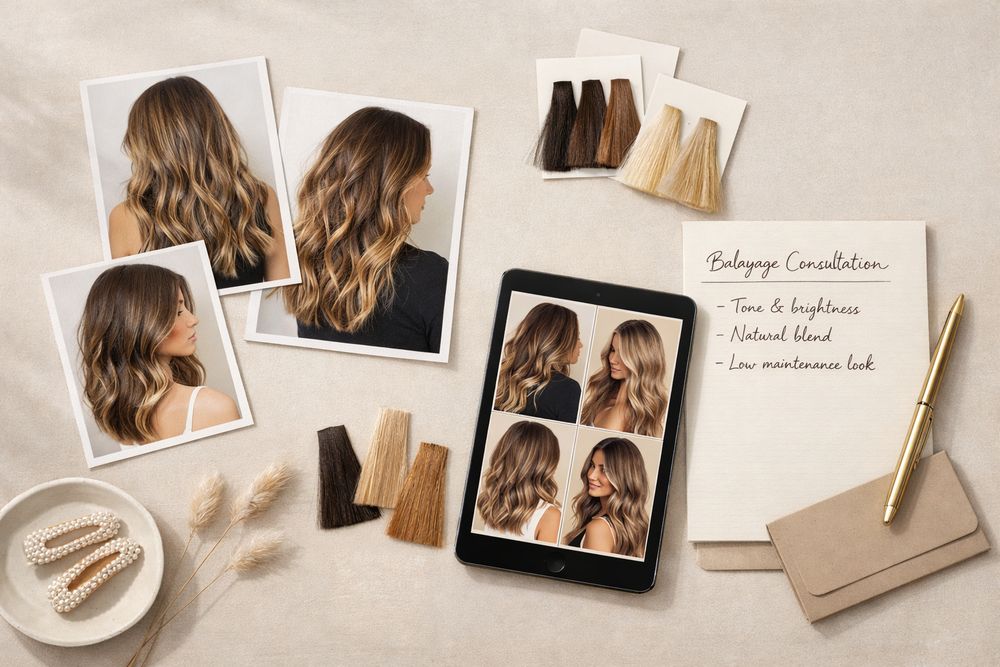
Bring different images, ideally with hair similar to yours in natural base, length, and movement. If you have brunette hair, for example, a photo on a dark blonde base may be more helpful than a very light blonde result achieved on a completely different starting point.
Previous Treatments: What You Should Not Forget to Mention
Previous colors, toners, henna, partial lightening, or smoothing treatments can influence how the hair responds to lightening. Even if a treatment now seems faded, it is better to mention it: it helps the colorist choose a more careful and coherent approach.
Before the appointment, prepare these details:
- When you last colored your hair, even if it was only a gloss or a light toner.
- What services you have had before, such as lightening, highlights, henna, straightening, or keratin.
- How often you use heat tools, because frequent straightening, curling, or blow-drying can affect the sensitivity of lengths and ends.
- How much time you want to dedicate to maintenance, especially if you would like a brighter balayage.
- What result you want to avoid, for example a tone that feels too golden, too cool, too strong, or not natural enough.
| What to prepare | Why it matters | How to explain it in the salon | What to avoid |
|---|---|---|---|
| 2–4 realistic reference photos | They help clarify the desired tone, contrast and brightness | Show images in natural light with hair similar to yours | Bringing only one photo that is very different from your base |
| Recent color history | It affects how the hair may respond to lightening | Mention permanent color, glosses, toners or previous lightening | Saying “I don’t remember” if you have useful details |
| Previous treatments | Some services can influence how the lengths react | Mention henna, keratin, straightening or smoothing treatments | Hiding treatments because they seem faded |
| Styling habits | They help evaluate sensitivity and future maintenance | Explain how often you use straighteners, curling tools, blow-dryers, pools or sea exposure | Downplaying frequent heat styling |
| Aesthetic goal | It helps turn inspiration into a realistic color plan | Explain whether you want more brightness, softness or a visible change | Asking for an identical copy of a photo |
| Results to avoid | They help the colorist understand your aesthetic boundaries | Say if you do not want tones that are too warm, too cool or too strong | Only saying what you like without clarifying what you dislike |
| Time for maintenance | It influences intensity, toning and future touch-ups | Be honest about how much time you want to dedicate to home care | Choosing a bright result without considering maintenance |
| Practical questions | They make the consultation clearer and more collaborative | Ask about timing, possible sessions, home care and the recommended path | Deciding without clarifying doubts about feasibility and upkeep |
The more precise the consultation, the more realistic the color plan can be. The point is not to limit the initial wish, but to turn it into a sustainable choice for your hair, your everyday style, and the level of maintenance you are truly willing to follow.
What the Colorist Evaluates Before Suggesting a Balayage
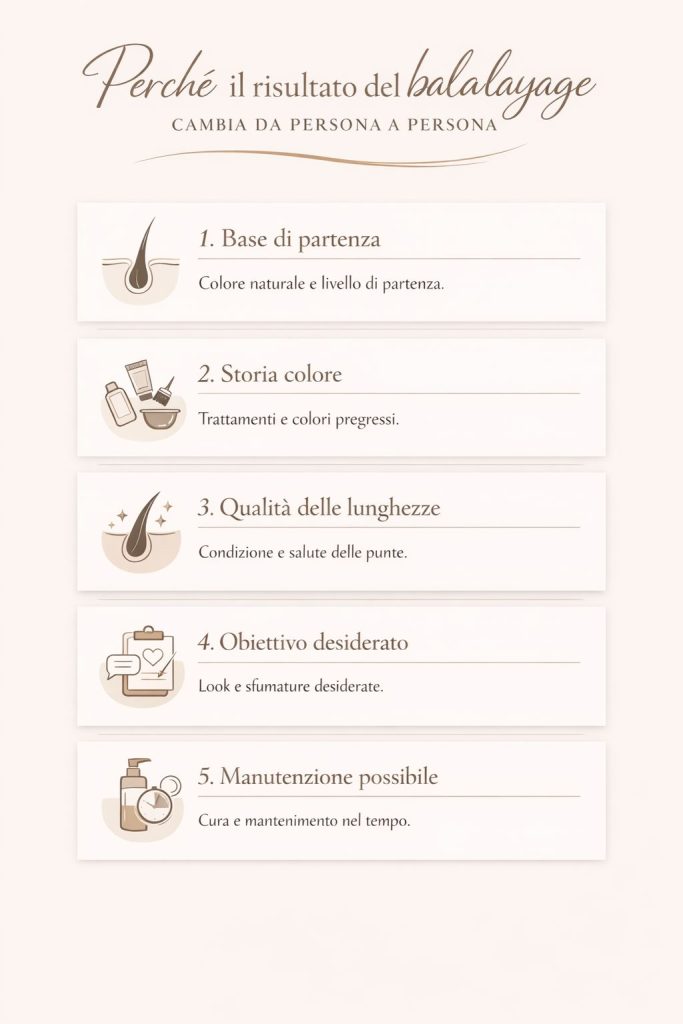
Before suggesting a balayage, the colorist looks at the hair from several angles: visible color, structure of the lengths, porosity, previous lightening, and how the light falls on the haircut. This analysis helps determine how much lightening makes sense, where movement should be created, and what kind of result can remain harmonious with the starting base.
Natural Base, Lengths, and Hair Quality
The natural base is both a technical and aesthetic starting point. On brunette, dark blonde, or already lightened hair, the path can change significantly: not because one is “better” or “worse,” but because every base responds differently to controlled lightening.
Lengths and ends also deserve attention. If they are compact, elastic, and even, the colorist can design more distributed brightness. If they are sensitized, dry, or marked by previous color, the work needs to be more cautious: sometimes a softer, more refined effect is preferable to a change that is too fast.
When a Strand Test or a Gradual Plan May Be Useful
When the color history is unclear or there are layered pigments, a strand test may be useful. It is not necessary for everyone, but it can help understand how the hair reacts before building a complete technical plan.
If the goal is very far from the starting color, the most elegant choice may be a gradual path: working step by step, respecting the visual quality of the hair, and building brightness in a more controlled way. The first appointment, therefore, does not always need to complete the entire transformation.
Balayage or Another Technique? How the Consultation Clarifies the Choice
Many people arrive at the salon asking for balayage, but what they are really looking for is an effect: more brightness, soft contrast, natural lightening, or a visible change without a harsh regrowth line. The consultation also helps separate the name of the technique from the result you want to see on your hair.
Balayage is often chosen when the desired effect is soft, personalized, and less striped than other lightening techniques. But it is not the only possible path: sometimes a result closer to ombré, shatush, or color correction may respond better to the starting base, length, or desired level of maintenance.
Before deciding, it helps to clarify where you want to see brightness, how much contrast you want, and how committed you are to maintaining the color over time. If you are unsure between similar techniques, it can help to choose between balayage and shatush. Understanding these differences before the service helps avoid vague requests and allows the colorist to suggest a direction that is more coherent with your style.
Realistic Expectations: What Can Change from Person to Person
One of the most important parts of the consultation is understanding what is realistic for your hair today. The same reference photo can create a different effect on a natural brunette base, already lightened hair, or lengths that have gone through several color services over time.
If the Hair Is Already Colored or Sensitized
When the hair has a complex color history, the result does not depend only on the desired shade. Previous lightening, layered reflections, sensitized ends, or more porous areas may react unevenly to lightening. In these cases, the colorist needs to evaluate whether to work more gently, correct certain areas first, or suggest a gradual result.
This does not mean giving up on balayage. It means designing it intelligently: sometimes a softer effect, well placed and coherent with the starting base, is more elegant than forced lightening that risks looking less harmonious on the lengths.
Why Some Results Require More Than One Session
If the goal is to move from a dark base to a very bright blonde, or to correct old warm reflections, it may be necessary to divide the process into several appointments. Gradual work helps manage contrast, toning, and the visual quality of the lengths more carefully, without treating the reference photo as something to replicate automatically.
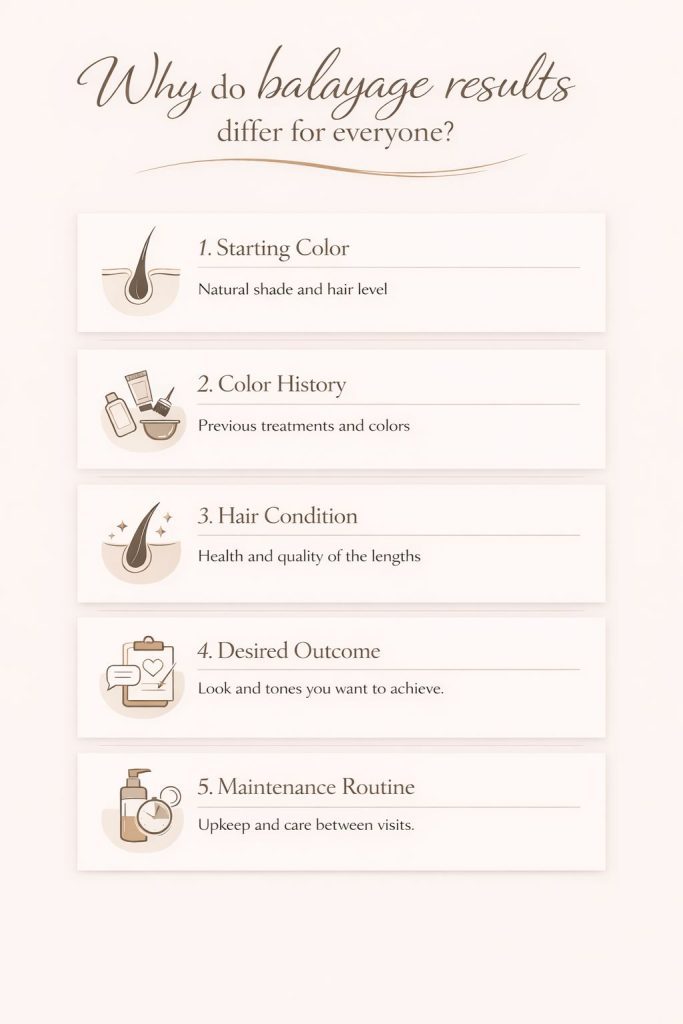
During the consultation, the question is therefore not only “Can I get this color?” but “What is the most sensible way to move toward this result?” A good color plan does not promise an identical copy of the photo: it interprets the inspiration in a way that is credible for your hair.
Cut, Movement, and Shape: Why Balayage Does Not Stand Alone
Balayage should never be viewed only as color. Its effect changes depending on the haircut, length, natural movement of the hair, and how you wear it every day. The same lightening can look softer on layered hair, more graphic on a blunt line, or brighter when it is built around the face.
For this reason, during the consultation, the colorist also observes the overall shape of the look. If the lengths are very even, the light needs to be distributed carefully so the ends do not look heavy. If the cut has movement, layers, or natural waves, balayage can follow the strands more naturally and add more dimension to the color.
The point is not necessarily to change the haircut, but to understand how color and shape interact. In some cases, better light placement is enough; in others, it may be worth taking time toplan color and haircut together. This helps guide the result in a way that feels more coherent with the face, texture, and daily routine.
The Right Questions to Ask Before Starting
A good color consultation is not a technical monologue; it is a conversation. The right questions help the colorist understand your aesthetic goal more clearly and help you know what to expect before starting.
Before confirming the service, it is worth asking:
- “Is this result realistic on my current base?”
This connects the reference photo with your natural base, color history, and the quality of your lengths. - “Can it be achieved in one session, or does it require a gradual plan?”
This helps clarify whether the technical plan will be immediate or divided across several appointments. - “What maintenance will this balayage require?”
A color that looks beautiful in the salon should also be compatible with washing, styling, home care, and possible future toning. - “Which tones suit me best: warm, cool, or neutral?”
The most beautiful color in a photo is not always the most harmonious one for the face. - “What should I avoid after the service?”
Understanding how to treat the color from the beginning helps keep it looking more polished over time, without expecting it to remain identical without care.
These questions are not about controlling the professional’s work, but about making the appointment clearer and more collaborative. When client and colorist share expectations, limits, and maintenance needs, balayage becomes a more conscious choice.
After the Consultation: How to Decide on the Next Step
After the consultation, the decision should not be based only on excitement about a photo or the wish to change immediately. The next step makes sense when you have understood the proposed path, the realistic level of lightening, the maintenance required, and whether a gradual approach may be needed.
If the color plan is clear, you know which areas will be brightened, which toning direction may best enhance the base, how visible the result will be, and what care will be useful at home. If doubts remain about timing, intensity, or maintenance, it is better to clarify them before starting.
The right moment to proceed is when aesthetic desire and technical feasibility meet. This does not mean giving up on the initial inspiration; it means turning it into a color project designed around your hair, your style, and your daily routine.